Photo: Google Gemini · AI-generated
Walk into a typical restaurant’s back office and count the systems. A POS terminal from one vendor. Online ordering from another. Menu screens from a third. An inventory spreadsheet. A payroll tool. Each one works. Together, they don’t — and the gaps between them are filled by the most expensive integration layer there is: staff re-typing numbers during the busiest hours of the day.
The industry has noticed. The clearest restaurant-tech trend of 2026 is consolidation — operators replacing stacks of disconnected point solutions with unified platforms, and a 2026 POS trends study found 90% of restaurants name better integrations as their top POS priority. Best-of-breed had a long run. Connected is winning.
Why the gaps cost more than the tools
Every seam between two systems is a place where data has to be moved by hand, and hospitality is uniquely bad terrain for manual data work. Orders peak in bursts. Margins are thin. Staff turnover is high, so the person doing the re-typing is often new to it. A mismatch between what the POS sold and what inventory thinks is left doesn’t show up as an error message — it shows up as food cost creep, discovered at month-end, unexplained.
That means the real comparison was never “platform features vs. point-solution features.” It is: how much does the space between your systems cost you every week? For most operators, more than any single tool ever did.
What connected looks like when it’s real
We’ve built this twice, at two very different scales.
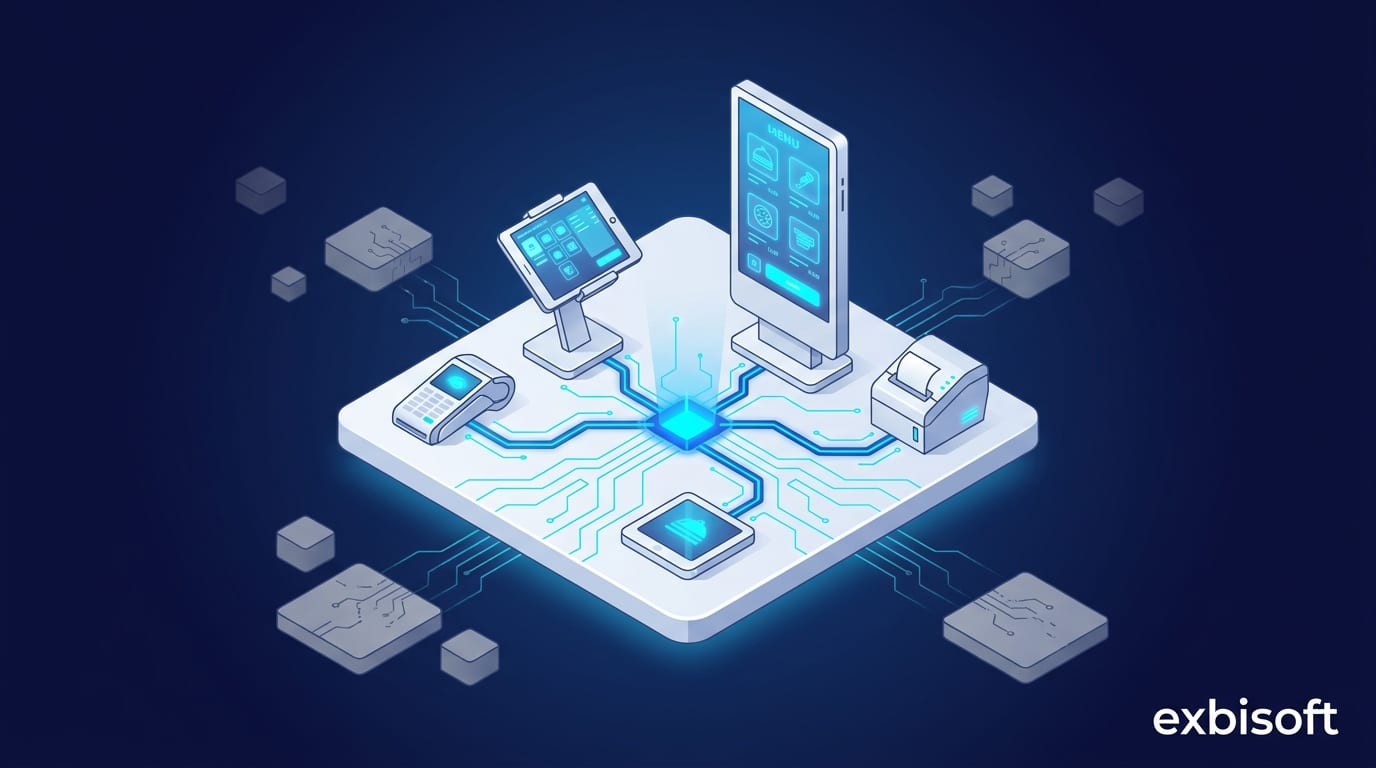
Dinifi is a mobile-first POS and ordering platform for restaurants and service merchants — smartphone POS, in-store iPad ordering, and Apple TV menu displays, all running on one backend. The point isn’t any single feature. It’s that an order placed at the table, a sale rung up on a phone, and the menu on the screen are never out of sync, because there is nothing to sync — it’s one system wearing three screens.
Geek ERP makes the same argument at group scale: a hospitality ERP for a multi-entity group that had HR, finance, and supply chain fragmented across every company it owned. One platform now runs employee records, payroll, inventory, and billing across all of them — while still respecting each entity’s own structure and cost centres. The win is one truthful view of the group where there used to be per-company fragments.
The honest part: connected isn’t free
Consolidation has a cost, and it’s worth naming plainly. “One platform” is real engineering: shared data models, integration work with the systems that remain, and — when your operation’s shape is unusual (a multi-entity group, a specific hardware mix, a workflow no vendor anticipated) — custom software rather than a subscription. An off-the-shelf unified platform is built for the average restaurant; if you’re not the average, you’ll be back to workarounds inside a year.
The point is: the integrated direction is right, but how you get there depends on how standard your operation is. Standard operation, standard platform. Unusual operation — the platform is worth building around how you actually work.
We build for the food and beverage sector in both modes. If your systems don’t talk to each other, tell us what’s in the stack — we’ll tell you honestly whether connecting it is an integration project or a build.