Tradeshow Gamification Apps
A German digital agency needed a way to help an automotive brand engage and educate visitors at trade shows — turning passive booth traffic into an interactive, competitive experience visitors…
View Case Study →Native and cross-platform apps for the field, the shop floor, the store and the app store
We build native and cross-platform applications for iOS, iPadOS, tvOS and Android. Field tools that keep working without a connection, iPad kiosks deployed by the hundred, consumer apps in the stores, white-label apps under a partner's brand. Whether you need one shared codebase to contain maintenance cost or separate native apps for maximum platform quality, we cover both, and the backend and distribution that come with them.
The people using a mobile app are standing on a construction site, in a warehouse aisle, in front of a customer in a store, or on a bike in traffic. They expect platform-native behaviour, offline resilience and performance that a resized web view cannot deliver. Getting this wrong costs retention and store ratings on a consumer app, and it costs trust and adoption on an internal one: a field tool that loses a report when the signal drops is abandoned within a week.
We treat mobile development as its own discipline, with dedicated iOS and Android engineers, and we treat the app as part of a system: the API it talks to, the sync it relies on, the pipeline that puts the right build on the right device.
Swift for iOS, iPadOS and tvOS; Kotlin and Java for Android; .NET MAUI and Xamarin where one codebase across iOS, Android and Windows is the right trade. Chosen per product, not per habit.
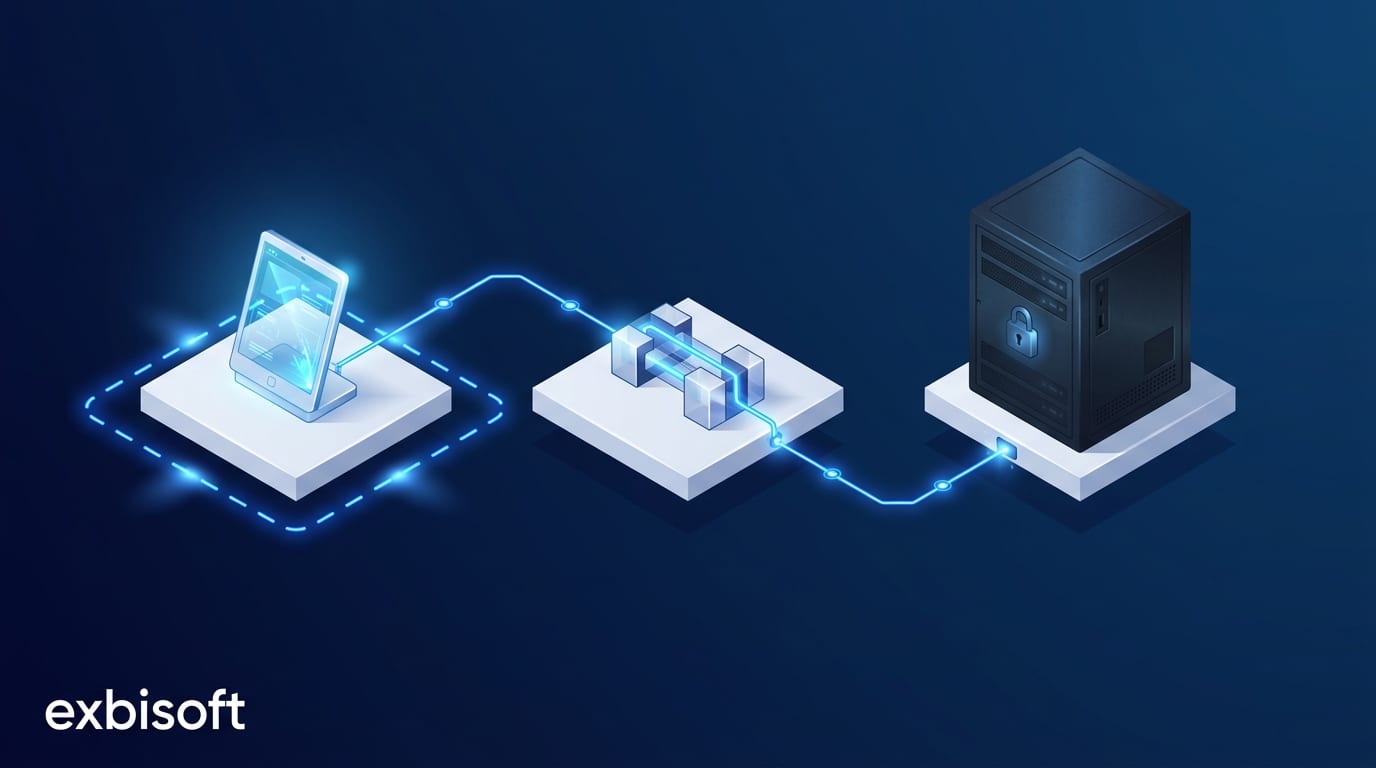
A construction company's subcontractors receive and update tasks and drawings from native iOS, Android and Windows apps that work fully without connectivity and sync when it returns. Field engineers at a water treatment company upload inspection reports to the CRM over a secure tunnel, and a dedicated iPad app shows every failed upload and retries it with one tap. No report is lost because a connection dropped.
For a jewellery manufacturer we replaced end-of-life Windows tablets with a native Swift iPad app now running on more than 500 in-store kiosks across Europe, integrated with their SAP middleware without touching the backend. For a manufacturer with 5,800 employees, an iPad app guides every visitor through safety briefings, signatures and approvals at multiple sites, with a digital audit trail.
Our team includes dedicated iOS and Android engineers, not one generalist stretched across both. A restaurant POS platform we built runs natively across iPhone, iPad and Apple TV; a cycling navigation app for a German state capital ships in Swift and Java under the agency's own brand.
We have moved a warehouse and production app from Windows CE to native Android while keeping it on the same Sage 100 data layer, and moved production apps from Xamarin to MAUI. These are specific, non-trivial paths, and they are not our first time through them.
Mobile, backend, API integration and release pipeline delivered together, so the app is never someone else's problem to connect or to ship. The build that reaches a site tablet came from the same pipeline as the web application it syncs with.
Tell us which platforms, which devices, and what conditions the app has to survive. We will tell you honestly whether native or cross-platform is the right call, and what it takes either way.
Start a conversation