ServicesDevOps & Infrastructure

Release pipelines, environments, infrastructure — and the security inside them

Releases should be events you plan, not crises you manage.

We build and run the path your code takes from a commit to a live system: the pipeline, the environments it passes through, the infrastructure it lands on, and the checks that stop a bad change before a customer sees it. Security is part of that path from the first stage, not a test bolted on before launch.
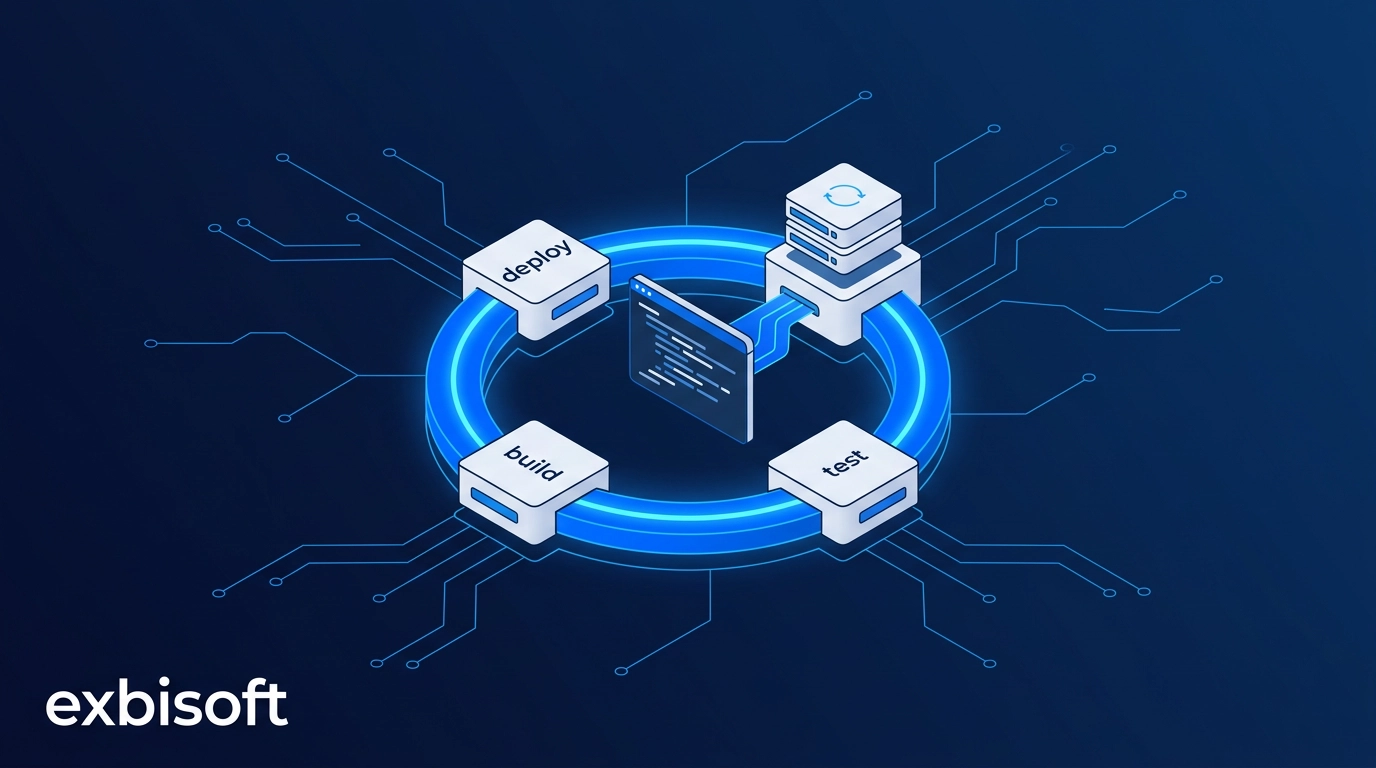
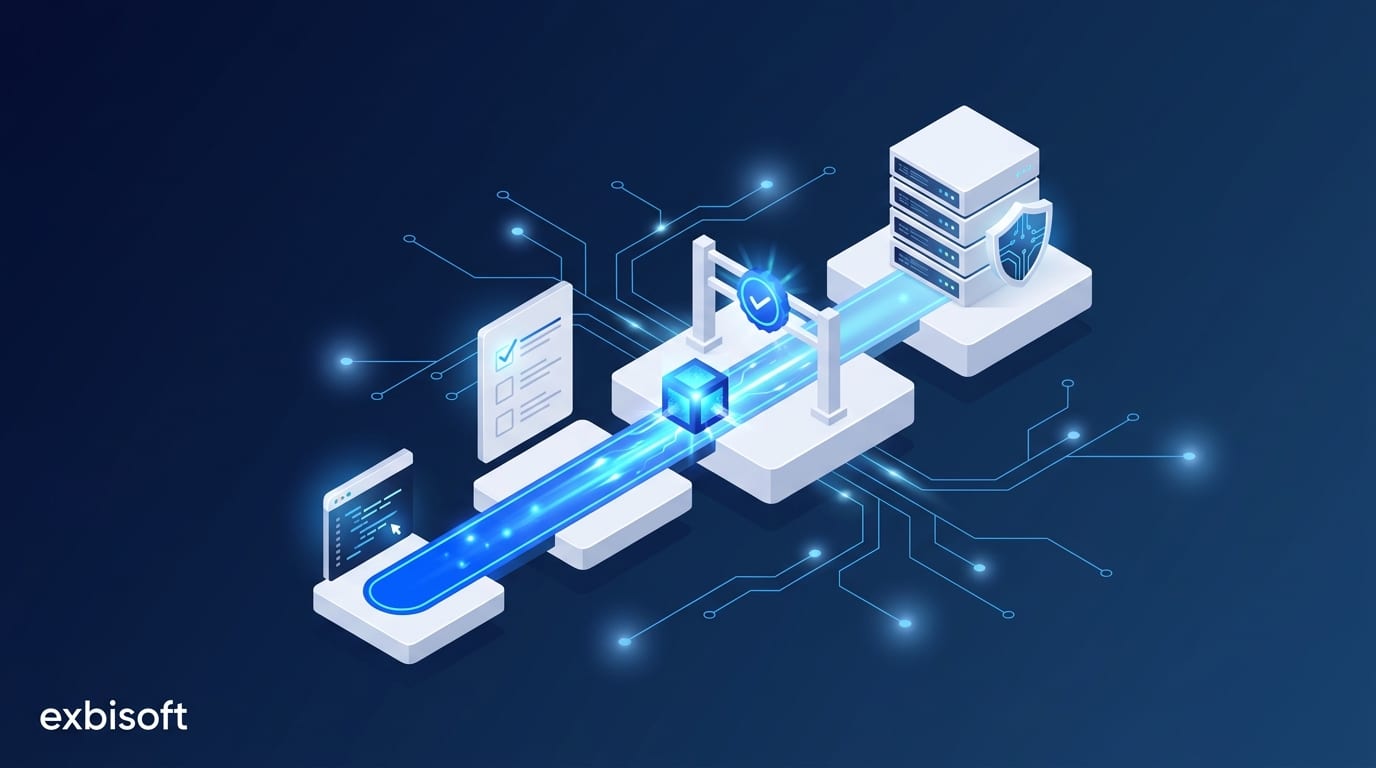
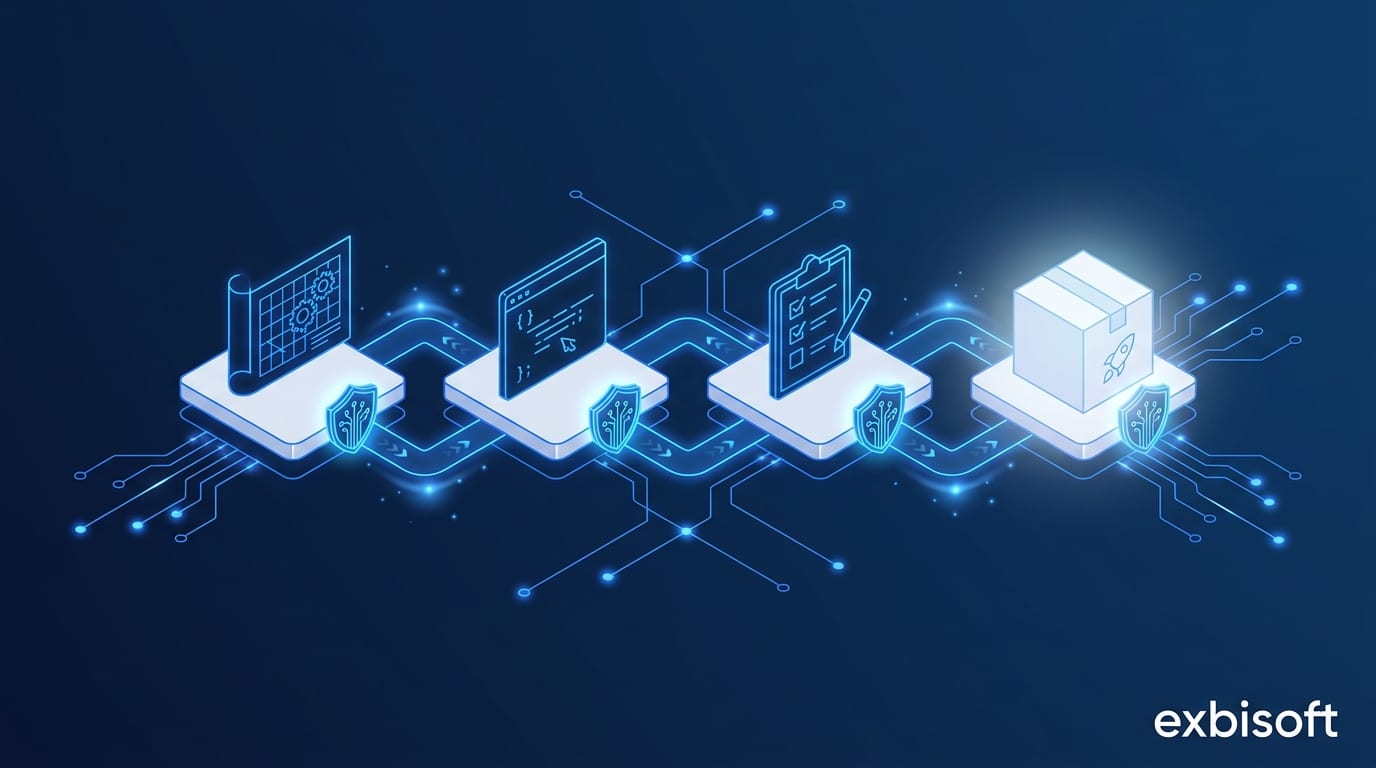
Isometric illustration of a CI/CD release loop with four stages, each carrying a small shield, a dependency scanner and a secrets vault on the track, and a gate before the production server

Manual releases do not scale with the team — and they hide the risk.

Ad-hoc deployments work until they don't. A missed step, an untested environment difference, a release that only one person on the team knows how to run, a server that was fixed by hand one evening and never documented. Each of these is a liability, not a process. And the same gaps are where security incidents come from: a secret in a repository, a database reachable from the wrong network, a dependency nobody chose deliberately that now carries a critical advisory.

We replace that with one path to production that every change walks the same way, whoever is on shift — with the security checks inside the path, so the penetration test at the end confirms what the pipeline has already enforced.

What we deliver.

Right-sized for a mid-sized team: enough automation to be repeatable and auditable, not a platform you will spend a year maintaining.

  • CI/CD pipelines from commit to production on Azure DevOps or GitHub Actions — build, test, package, deploy, with the run history as your release record
  • Gated environments: development, QA, test and live as separate, identical environments, so every change walks the same path and nothing reaches production untested
  • Infrastructure as code for private cloud, on-premises and hyperscaler targets, so nobody has to remember what was clicked
  • Security built into the pipeline: dependency and container scanning that fails the build, secrets kept out of repositories and injected at deploy time, least-privilege service accounts, deny-by-default network rules
  • Docker containerisation and disposable test infrastructure, for example a fresh SQL Server container per pipeline run instead of a shared test database
  • Mobile release distribution: parallel test, pilot and production builds delivered to field devices through Firebase App Distribution and the stores
  • Monitoring, alerting and logs that can answer who did what, when — and rehearsed restores, so a backup is a recovery plan rather than a file
  • Cost-aware operation: environments that scale down when idle and a bill you can read

Related Case Studies

View all Case Studies →
Industrial Machinery
Industrial Machinery.NETAngular+6

Purchasing Portal

A 100–150 employee manufacturer in Germany was managing a vendor network spanning multiple countries through a combination of email, spreadsheets, and manual ERP entries — slow, error-prone, and…

View Case Study →
Government & Public Sector
WebAPI IntegrationWeb Development+5

CarLicence

CarLicence, a South African startup, provides white-label licence disc renewal (LDR) infrastructure that businesses, insurers, and financial platforms integrate into their own websites, mobile…

View Case Study →
Construction
Construction.NETAngular+9

Subcontractor Portal

A construction company with up to 500 employees in Germany was managing a web of subcontractors, documentation obligations, and real-time coordination demands that no standard project management…

View Case Study →

Why exbisoft.

Built by the team that ships the code.

Our DevOps work is done by the engineers who also build the applications running through these pipelines — not a disconnected infrastructure team. A construction company's Subcontractor Portal runs on private German cloud through a dev–QA–test–live pipeline we built alongside the application itself, with its iOS and Android builds distributed to field devices from the same pipeline.

Security as a property, not a phase.

Scanning, secrets handling, least privilege and network rules live inside the delivery path, where they run on every change. The pre-launch penetration test still happens; it just confirms rather than discovers.

Repeatable by design.

Automation that removes tribal knowledge from the release process, so it does not depend on one person being available — and that leaves a record: which commit, which environment, which approval, at what time.

Right-sized tooling.

We configure what your team actually needs for the systems you actually run: a private rack in Germany, an on-premises server, or Azure. The discipline is the same; the platform is your choice.

Proven under real load.

For a licence-renewal platform with partners embedding it in websites, apps, POS systems and ATMs, we own the CI/CD pipelines, environment management and production monitoring as an embedded team — the kind of always-on service where a bad release is public within minutes.

Related Insights

View all Insights →
SecurityDevOps & InfrastructureQA & Testing+1

Security Is Not a Phase

The penetration test is booked for the last week before launch. Everyone knows the date. It sits in the plan as a box called "Security". That box is the problem. A test in the last week can only…

Read Insight →
API IntegrationCustom Software DevelopmentDevOps & Infrastructure

The API You Expose Is a Promise

Most software decisions are reversible. You pick a framework, regret it, and replace it. The cost is yours and it stays inside your building. Publishing an API is different. The moment someone…

Read Insight →

Releases still depend on one person, or on luck?

Tell us how you deploy today, where your secrets live and how a change reaches production. We will tell you honestly where the risk is — and what one path to production would look like for your team.

Start a conversation